
Le Bois du Cazier
Cultural activity
to 12 Km in our area
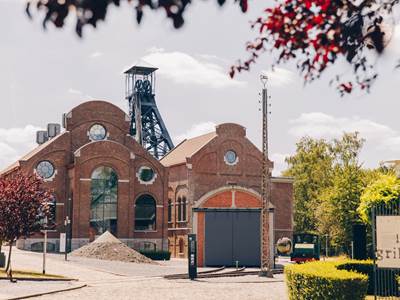
First attraction of the Pays de Charleroi with 60,000 annual visitors, this essential must be marked with a cross on the tourist map of Wallonia! South of Charleroi, the Bois du Cazier is an unmissable cultural place against the background of industrial heritage.
Read more
Our recommendation
An emotionally rich visit during which you will discover the lives of miners and their families, at a time when black gold was the source of Charleroi's wealth. An exceptional and very well-maintained site.
Seneffe Castle and Domain
Cultural activity
to 8.5 Km in our area
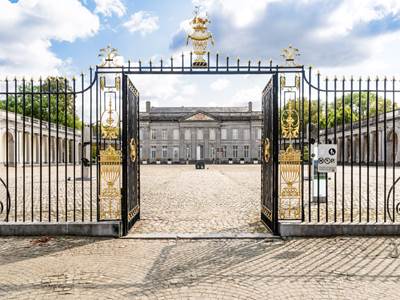
Experience the 18th century in the 21st! Welcome to the Age of Enlightenment From one day to the next, the 18th century at the Château de Seneffe is a fun and lively way to discover the new scenography of the permanent collection of the Goldsmith Museum of the Wallonia-Brussels Federation. An exhibition that highlights the collections and allows visitors to experience the "imagined" life of the castle lords of the Age of Enlightenment, based on an almanac. A place for walks, the Parc du Domaine du Château de Seneffe is also a site for outdoor contemporary art exhibitions , an event space where visitors are seduced by the bucolic landscape and the variety of events.
Read more
Our recommendation
We highly recommend Seneffe Castle and its Museum of Silversmithing of the French Community of Belgium for one simple reason: it's not just a castle to visit, but a true immersion in the art of living in the 18th century. The site harmoniously combines architectural heritage, first-rate museum collections, and extensive landscaped grounds, making for a particularly comprehensive visit. The castle itself is considered one of the finest examples of neoclassical architecture in Belgium. The interior decorations, parquet floors, woodwork, and salons offer a tangible understanding of how the Enlightenment aristocracy lived. Unlike some castles where the rooms are sparsely furnished, Seneffe's design seeks to recreate a lively and accessible atmosphere. The estate's other great strength is its silversmithing museum. It houses one of the most important collections of silversmithing in Belgium, with several hundred objects ranging from tableware to the most refined decorative pieces. These collections allow us to discover the customs, social prestige and artisanal know-how of the period in a very concrete way.
Les Jardins d'Annevoie
Natural heritage
to 38.7 Km in our area
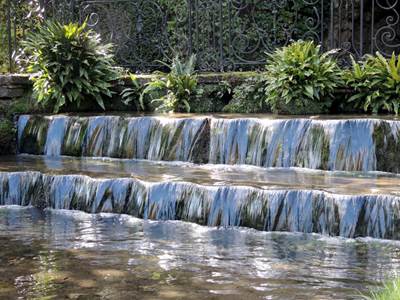
Discover these landscaped gardens 250 years ago and listed in the major heritage of Wallonia. Stroll among the fountains, the waterfalls, the ponds and the fountains, through the ordered French gardens, the intimate Italian or even the wilder English. Bicentennial gardens Located in the province of Namur, the Annevoie Gardens are the only water gardens in Belgium. Housed in the 18th century, they are among the most beautiful in Europe. This major heritage of Wallonia, where the charm of nature reigns is to discover the seasons. Water gardens The gardens do not use any machinery. The water flows naturally, only thanks to the natural unevenness. Discover strolling alleys, dozens of waterfalls and fountains, pools, ponds and symmetrical rows of majestic trees. Style gardens At every turn, this magical place offers you a new landscape: the superb perspectives of the French gardens, the fantasy of the English style and the intimate charm of the Italian style. Let yourself be surprised by a dazzling and romantic show at each stop. Your kids will also love the wooden playground with a lot of fun for 3-12 year olds. Do not miss his French garden. Visitors with special needs This attraction offers facilities or facilities for people with special needs: Deaf people with difficulty of comprehension: plans with explanations are available This structure is not certified Access-i, we invite you to contact directly to it to know the conditions of actual accessibility.
Read more
Our recommendation
We highly recommend the Annevoie Gardens, as they are an absolutely unique site in Belgium. Unlike many historic gardens, Annevoie impresses not only with its aesthetics but also with its remarkable feat of 18th-century hydraulic engineering. The fountains, cascades, pools, and water features still function today without pumps or motors, relying solely on gravity and the principle of communicating vessels. What makes a visit particularly interesting is the harmonious blend of three major European landscape traditions: the rigor and perspectives of the French formal garden; the water features and visual surprises inspired by Italian gardens; and the more natural and romantic spaces inherited from the English garden. The estate covers approximately 12 hectares and boasts more than fifty fountains, water jets, cascades, and canals. At every turn of the paths, a new viewpoint, sculpture, pool, or waterfall appears. The walk is particularly pleasant as it constantly alternates between open spaces and more intimate, shaded areas. One of Annevoie's great strengths is that it offers a contemplative experience. People don't come here to absorb historical information like in a museum, but to enjoy an exceptional setting, listen to the sound of water, admire the views, and take their time. It's a place that suits heritage enthusiasts, families, and photography lovers alike. Tips for making the most of your visit: Allow 2 to 3 hours to explore the entire site at a leisurely pace. Unlike some very popular attractions, there's no need to arrive as soon as it opens. A visit in the late morning or early afternoon is generally ideal. If possible, choose a spring or early summer day, when the vegetation and flowers are at their most vibrant. Take the time to sit in different spots throughout the park: some vistas and waterfalls reveal themselves more fully when observed for a few minutes. For photographers, the late afternoon light is often the most flattering on the ponds and the rows of trees. Comfortable shoes are recommended, as the visit is mainly on foot along long walkways.
BPS22 Art Museum of the Hainaut Province
Cultural activity
to 9.6 Km in our area
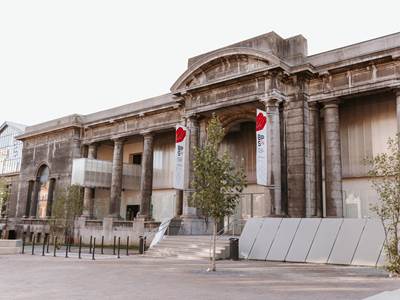
A pioneer in the cultural development of Charleroi since the early 2000s, the BPS22 is now an indispensable art museum in the Belgian cultural landscape. It is notable for its insightful and occasionally dramatic exhibitions, which nevertheless are accessible to the general public through innovative mediation. Mindful of its contribution to critical thought, relationships between art, power and society inform the Museum's main thematic areas and its purchasing policy.
Read more
Our recommendation
We highly recommend the BPS22 – Museum of Art of the Province of Hainaut in Charleroi because it offers a contemporary art experience unlike traditional museums. Here, the building itself is an integral part of the visit: housed in a former 2,500 m² industrial hall dating from 1911, the museum benefits from monumental spaces bathed in natural light, particularly well-suited to large-scale contemporary installations. What truly distinguishes the BPS22 is its programming. The museum doesn't simply present works of art: it offers exhibitions that explore social issues, contemporary culture, the media, identities, and the transformations of the modern world. Even visitors unfamiliar with contemporary art often find food for thought thanks to an accessible and engaging approach. Another strength: each visit is different. The museum operates primarily with regularly changing temporary exhibitions. Therefore, you don't visit the BPS22 just once to "see everything"; It's a place that rediscovers itself with each passing season. The museum also boasts a significant collection from the Province of Hainaut, comprising several thousand works spanning over a century of artistic creation, from painting and video to installation and performance art. Tips for making the most of your visit: Allow between 1.5 and 2.5 hours, depending on your interest in contemporary art. Take the time to read the gallery texts: they often provide essential insights into the works. It's generally not necessary to arrive as soon as the museum opens. A visit in the early or mid-afternoon is ideal. Keep an open mind: some works aim more to provoke thought than to be visually appealing. Check the current exhibition before your visit. The content changes regularly, and some exhibitions may be more suited to your interests than others. If you're visiting Charleroi for the day, the BPS22 combines perfectly with the Museum of Photography or the Charleroi Museum of Fine Arts for a particularly enriching cultural outing. In summary, BPS22 is an excellent recommendation for curious visitors, open to contemporary art forms and eager to discover a dynamic facet of Charleroi's cultural renewal. More than a museum, it is a place for dialogue between art, industrial architecture, and major contemporary issues.
Musée de la Photographie
Cultural activity
to 9.7 Km in our area
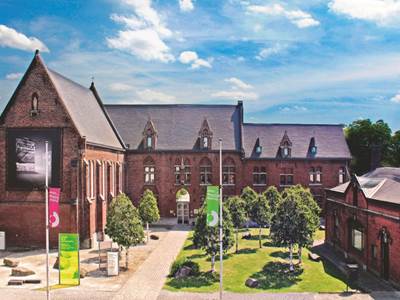
Considered to be the largest and one of the most important photography museums in Europe, the Museum of Photography - Centre for Contemporary Art of the Wallonia-Brussels Federation, has settled in 1987 in a former neo-Gothic CarmeliteConvent to which a dary architectural contemporary wing was added in 2008. Nestled in a 85 ares pa rk, the Museum has an exhibition space of more than 2,200 m² where photography reveals its artistic and technical diversity. Over 800 photographs taken from a rich collection of 80,000 photos and 3 million negatives, the permanent exhibition relates the history of photography from pioneers to nowadays in Belgium and around the world. In the cloister showcase, the collection of cameras recounts the history of the photographic equipment sorted by families, according to the evolution of its forms and its technical specificities (Snapshots, tropical, detectives, stereo, folding, box ...). Displayed in five dedicated rooms, fifteen temporary exhibitions explore each year all aspects of the medium in order to sketch a panorama of photography, in Belgium and internationally, in history and nowadays. Trough an educational approach, the Discovery Trail also accompanies young and old visitoir, every curious person along the photography adventure, from optical illusions to the photographer's language. Several associated services are also open to the public: The Library : open to amateurs, students and researchers. This specialized library displays up to 13. 000 titles (general works, monographs, technical treatises and journals) that can be consulted with free access on site. It is supplemented by a documentation centre. The Museum Café : a peaceful place to eat with a breathtaking view on the Carmelite park and the photographic decoration hung on the surrounding park walls. The Museum Shop where books and objects related to photography are carefully chosen. It also has a "Children's Corner".
Read more
Our recommendation
We highly recommend the Museum of Photography, as it is not only one of the most important photography museums in Europe, but also a place where one can truly understand the evolution of the photographic image, from the first daguerreotypes to contemporary creations. Housed in a former neo-Gothic Carmelite convent, extended by a modern wing, the museum offers an exceptional architectural setting that fully contributes to the visitor experience. What particularly distinguishes this museum is the breadth of its collections. With approximately 100,000 photographs in its collection, more than 800 works presented in the permanent exhibition, and over a million archived negatives, it is an international benchmark in its field. The visit allows one to follow the history of photography through its technical, artistic, and documentary developments. Another major strength lies in the quality of its temporary exhibitions. They cover everything from renowned photographers to emerging artists and social issues. The museum regularly renews its offerings, which provides an excellent reason to return several times. Even visitors who aren't photography enthusiasts are often captivated by the atmosphere of the place. The cloister, the former chapels transformed into exhibition spaces, and the park surrounding the museum create a calm and contemplative environment. Tips for making the most of your visit: Allow between 2 and 4 hours; the museum is vast and deserves to be explored at a leisurely pace. Start with the permanent collections to get a sense of the historical context, then move on to the temporary exhibitions, which take on greater significance within this context. There's no need to arrive as soon as the museum opens. A visit in the late morning or early afternoon is generally ideal. If you enjoy photography, bring a notebook or use your smartphone to jot down the artists who inspire you: the collections are so extensive that it's difficult to remember everything. Also, take advantage of the park and outdoor spaces, often overlooked by visitors in a hurry. Check the program before your visit, as some temporary exhibitions are reason enough to make the trip. In short, this is a must-see in Wallonia for lovers of art, photography, history, and visual culture. The museum achieves a rare balance between scholarly rigor, artistic quality, and accessibility for the general public. People often enter out of curiosity and leave with a new perspective on the images that surround us.
Balades et séjours guidés avec Défi Nature
Cultural activity
to 6 Km in our area
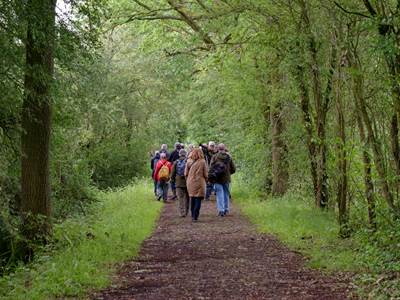
La nature n'est pas un luxe. Elle est une nécessité pour la santé de nos corps et de nos esprits. Permettre à tous, jeunes et moins jeunes, initiés ou débutants, de rencontrer la nature et ses splendeurs : telle est, depuis plus de 20 ans, la mission de Défi Nature. Rien de tel que de suivre les pas d'un connaisseur. Nos guides naturalistes chevronnés vous feront découvrir les fleurs, vous montreront les oiseaux, vous expliqueront l'écologie, vous aideront à lire le paysage, à comprendre l'impact de l'homme. Ils vous communiqueront surtout leur passion. Conçus pour être savourés en solo, en famille ou entre amis, les séjours et excursions de Défi Nature vous emmènent dans des régions où la nature est encore particulièrement belle et riche. Il n'est pas nécessaire de rouler 1000 km pour faire 1000 découvertes, car la découverte est avant tout dans le regard.
Read more
Our recommendation
We highly recommend Défi Nature's guided nature walks and stays in Pont-à-Celles because they go far beyond a simple stroll. Each outing is led by passionate naturalist guides who teach you how to observe and understand nature: birds, mammals, wild plants, fungi, landscapes, and local ecosystems. The goal is not just to walk, but to develop a genuine appreciation for the natural world. Unlike many traditional hikes where you follow a route independently, Défi Nature's activities are based on knowledge sharing and field observation. The association organizes over a hundred activities a year, with a wide variety of themes suitable for both beginners and more experienced naturalists. One of the great advantages of this activity is the rich natural environment of the Pont-à-Celles region. The surrounding area includes wetlands, ponds, nature reserves, and agricultural landscapes where remarkable biodiversity can be observed. The Launoy Pond area is one of the most interesting natural spaces in the municipality. Défi Nature also offers multi-day trips in Belgium and other parts of Europe for those wishing to deepen their knowledge of nature or discover exceptional sites accompanied by specialists. Tips for making the most of the experience: Choose a theme that matches your interests. A birdwatching, botanical, or mammal-focused outing offers a different experience. Bring binoculars if you have them. They are particularly useful on outings dedicated to birds or elusive wildlife. Dress according to the terrain rather than the weather forecast: some observations take place in wetlands or on paths that can be muddy. Don't hesitate to ask the guides questions. The educational aspect is one of the main strengths of these activities.
For wildlife observation outings, early morning or dusk walks are often the most rewarding, as wildlife is generally more active at these times of day. Book in advance, as some specialized or limited-group outings fill up quickly. To complement the experience, a self-guided walk in the Launoy Nature Reserve also allows you to discover one of the most beautiful natural areas in the municipality and observe some of the local biodiversity. In short, this activity is particularly recommended for nature lovers, curious families, wildlife photographers, and anyone wishing to learn to observe their surroundings more attentively. It's an enriching, accessible, and truly immersive experience without having to travel long distances.
La Porte noire
Rental accommodation
to 0.9 Km in our area
Read more
Our recommendation
We highly recommend La Porte Noire because it's not your average accommodation, but a truly characterful house steeped in history. Housed in a 17th-century building, the cottage faces the medieval castle of Trazegnies, offering a rare heritage setting in the Charleroi region. One of its main strengths is the balance between authenticity and modern comfort. The cottage has three bedrooms, several bathrooms, a spacious and bright living room, a fully equipped kitchen, and a garden with a pergola. It's ideal for a family or a group of friends looking to explore Hainaut in a peaceful setting. What we particularly appreciate is its location. From the cottage, you're directly in the heart of the historic village of Trazegnies. The castle is literally opposite, allowing you to fully enjoy the atmosphere without having to get back in your car. The location is also convenient for exploring Charleroi, Seneffe, the ruins of Villers-la-Ville Abbey, or the sites of the Charleroi region. Tips for making the most of your stay: Plan a visit to Trazegnies Castle; its immediate proximity is one of the gîte's great advantages. Unlike a city hotel, there's no particular benefit to arriving very early. Arriving in the mid-afternoon generally allows you to enjoy the garden and the village in a peaceful atmosphere. If you're staying for several days, use the gîte as a base for exploring central Hainaut: Seneffe, Charleroi, Thuin, and the surrounding areas are easily accessible. Photography enthusiasts will particularly appreciate the late afternoon light on the village square and the historic facades. In the summer months, take advantage of the garden for moments of relaxation; it's one of the features that truly sets this accommodation apart from more conventional lodging. In short, La Porte Noire is an excellent choice for travelers looking for more than just a place to sleep. Its appeal lies in its historical character, its privileged location opposite Trazegnies Castle and its authentic atmosphere which allows you to fully experience the atmosphere of a heritage village in Hainaut.
Pairi Daiza
Cultural activity
to 34.3 Km in our area
Pairi Daiza est un parc zoologique belge wallon situé dans la province de Hainaut, à Brugelette. Fondé en 1994, il s'est d'abord appelé Paradisio de son ouverture jusqu'en 2010.
Read more
Our recommendation
We highly recommend Pairi Daiza because it's not just a zoo, but a true travel destination. The park combines world-class animal collections, remarkable landscaped gardens, spectacular architecture, and themed areas that transport visitors across different continents. With over 800 species spread across a vast area and organized into ten "worlds," the experience goes far beyond a traditional zoo visit. What truly sets Pairi Daiza apart is its immersive quality. Each area has its own distinct architectural and landscape identity: Asian temples, an African village, a historic abbey, Chinese gardens, Nordic worlds, and a vast tropical greenhouse. You often feel like you're visiting several destinations in a single day. The park is also located on the historic grounds of the former Cistercian abbey of Cambron. This heritage aspect adds an extra charm not found in most European animal parks. Another strong point is the attention paid to the visitor experience. The enclosures are generally large and integrated into highly elaborate settings, which facilitates both animal observation and immersion in the park's different themed areas. Tips for making the most of your visit: Arrive as soon as the park opens. Unlike many other attractions, this is a real advantage at Pairi Daiza. The park is huge, and a full day is often needed to see the essentials. Plan for a whole day, or even two if you want to visit at a leisurely pace. Many visitors feel that a single day is not enough to see everything. Check the feeding and animal presentation times upon arrival; these are often the best times to observe certain species. Start with the most popular areas (giant pandas, polar bears, elephants) before the afternoon crowds arrive. Wear comfortable shoes: expect to walk several kilometers. If you are visiting in spring or summer, also take the time to admire the gardens and landscaping, which are an essential part of the experience.
For enthusiasts or families traveling from afar, an overnight stay at the park's resort can transform a visit into a true getaway, allowing for a more relaxed exploration of the grounds. In short, Pairi Daiza is one of Belgium's most impressive attractions. We recommend it not only for its rich wildlife collection but, above all, for its ability to transport visitors through meticulously recreated landscapes, cultures, and worlds. It's a destination that appeals to families as well as nature lovers, photographers, garden enthusiasts, and heritage aficionados.
Where are we?
13, Place Albert Ier, 6183 TRAZEGNIES
Itinerary